Tuesday, 25 October 2016

Canal's 200-year passage from commerce to cruising

The 127-mile canal from Leeds to Liverpoool was completed 200 years ago. Work on the stretch through Silsden began in 1769 and the first two boat-loads of coal arrived in 1773. Buildings at the wharf where Silsden Boats (Holidays) Ltd. are based have not changed greatly in more than 200 years. The following photographs show the post-war transition of the canal from its original main purpose of ferrying freight to become a major pastime of leisure cruising.


The eight photographs above are from the late Kevin Bower's collection.
An historic view of the buildings that are now the offices of Silsden Boats. This photograph and the following five views are from the late Will Baldwin's collection.


The canal at Kildwick (above and below) showing the Priest Bank Lane bridge.

The canal bend at Low Holden with on the left a wooded incline that was a popular play area for Silsden children of yesteryear.


Canoeists pass the Harwal Works mill site which is now being transformed as a housing development by Skipton Properties.

The photograph above and the view below are by courtesy of Silsden Camera Club. 

Above and below: early days of the housing development at Waterside where canal-side gardens have been colourfully cultivated over the years.

The photograph above and the two similarly reflective pictures below are by Brian Whittingham, a member of Silsden Camera Club.


Saturday, 22 October 2016

Autumn: elevated thoughts and a sense sublime


Tuesday, 18 October 2016

And the band played on as canal barge kept us in the dark
Silsden Town Band unexpectedly played an extended programme as townspeople waited and waited and waited to welcome a heritage cargo barge on a journey commemorating the 200th anniversary of the completion of the Leeds-Liverpool canal.
Kennet, a restored cargo-carrying short boat, and its flotilla were due to arrive at the wharf at Silsden (pictured above) at around 1815 hours on Sunday, October 16, where a civic reception had been arranged by the town's Grand deParty Group. Free refreshments were available.
Residents on both sides of the canal had decorated their gardens to cheer the Kennet on its 127-mile passage from Leeds to Liverpool.
Dusk turned to dark before the Kennet arrived more than an hour late, delayed by a mechanical failure of the Granby Lane swing bridge at Riddlesden. The Clarke family and friends (pictured above) and groups lining the towpath and the Keighley Road bridge, as well as the main gathering at the wharf, all did their best to make light of the setback. The 62ft. Kennet, built in 1947, is owned by the Leeds and Liverpool Canal Society and serves as a museum and learning resource. The barge left Silsden at daybreak the next morning to continue its nine-day voyage.

Family fun day opportunity to start rewilding

Bug-hunting sisters Lily Rose, 18 months, and Gracie May, 6, mum Charlotte Lamb (left) and the girls' cousin, Joseph Cooper, 4, are pictured at the Bumper Family Day at Silsden Town Hall on Sunday, October 16. Guiding them is teacher Lucy Thornton, who is on a mission to "Rewild the Child" through her Ace Workshops, which study nature, animals, conservation and the environment. Lucy teaches animal management at Craven College and has a smallholding at Oxenhope.

Rebecca Savage-Tatterton, 7, concentrates on making a necklace at Mrs Beads' Workshop at the Family Day while dad Paul Tatterton admires her handiwork. Organised by the Friends of Silsden Town Hall, the second annual Family Day also featured model railways, Bricks4Kidz, junior jazz dance, arts and crafts, glitter tattoos, library activities and a cafe. More than 200 attended.

Tuesday, 6 September 2016

Nicolson's prominent Place in the town's history

The corner of Silsden bearing the name Nicolson Place has played a long and interesting role in the life of the town. Before Mr Nicolson's time there was just a handful of 18th Century cottages there, along with the large three-storey building (demolished long ago) on the left of this photograph, which is from the late Kevin Bower's Collection.

For some reason, this building was known as T'Dog Oil with the top floor given over to hand-loom weaving and several families of nail-makers and labourers accommodated below.  The top floor was later used by the town's Wesleyan Methodists as their first  place of worship before they were able to raise enough funds to move in 1813 to their own premises, in Highfield Lane.
Above: the rear of T'Dog Oil. When the name faded into history, the building became known as Horne's Garret because it was owned by farmer Peter Horne, whose nearby small farmhouse fronted on to Main Street (near the present Town Hall) along with 40 acres of pasture.
The entrance to Nicolson Place from Kirkgate (opposite Post Office) can be seen at the bottom right of this striking circa 1960s photograph from the late Kevin Bower's Collection, showing the great extent of the Airedale Shed mill, which grew out of Angus Nicolson's textile ambitions. Nicolson, born in 1817, was a Scotsman from Stornoway, who was appointed in the late 1850s as a land agent to Lord Hothfield at Skipton Castle. Nicolson quickly realised there was money to be made from Silsden’s rapidly growing textile industry based in the mills.
Nicolson paid for the building of a large new mill (always known as Airedale Shed) with two steam engines and chimney, which for over a century dominated the area and skyline between New Road and Kirkgate. Nicolson offered the premises for lease, this being taken up by several manufacturers including the Fletcher and Knox families. Pictured above are employees of C. H. Fletcher's.
 This photograph is of weavers at Knox's.
Warpdressers at Knox's.
Nicolson Place, as it was then officially named, continued to be the home of many local characters and eccentrics, perhaps the most memorable being Thomas Bottomley (pictured above), better known as Tom O’Fannys (Tom, son of Fanny), which distinguished him from several other Silsden men of the same name. Tom, who sold odds and ends from a small flat cart pulled by a pony, may have been dishevelled, down at heel and unschooled but he was far from unintelligent and his pithy remarks and poems were treasured by the community. Tom spurned offers of help and sustenance, saying “We never died in winter yet” – but he indeed passed away on a cold November night in 1900 at Skipton Workhouse. This photograph is from the late Neil Cathey's Collection.
Other characters included Asquith Tillotson and Jack Atkinson (Jack O’Miles), pictured above, who ran a tailoring business from a congested wooden hut in Nicolson Place and played a variety of brass instruments for the delight of themselves and their customers.
For much of the late 19th Century and well over half the 20th Century, Nicolson Place was a vibrant spot with mill employees arriving and departing work, and numerous local organisations, including the  Homing Society, using it as a starting point for trips and outings. This photograph, courtesy of Jean Bancroft, shows a late 1940s Royal British Legion gathering.
The 1970s and 1980s brought huge changes. Airedale Shed closed for good.
Several of the Nicolson Place properties were demolished, although some cottages were saved and renovated as important examples of our industrial heritage, as was a portion of the old mill, which was transformed into apartments, as can be seen in the photographs above.

The above photograph and the following five pictures, courtesy of the Clarkson family, give interesting perspectives of demolition and other work at the site in January-February 1990.


Nicolson Place today -- still playing an important role in town life. 
For many years Holgates was a popular presence at the corner of Kirkgate and Nicolson Place.
Bilaluci's cafe bar has been a welcome addition to Silsden's retail offering. This photograph was taken in 2012.

Sunday, 21 August 2016

Foul forecast forces gardeners' show indoors
Above: Town Mayor Councillor Peter Robinson is pictured with prizewinners of Silsden Allotment Association, whose annual show on August 20th was forced indoors when a week of fine weather came to an abrupt end. The neighbouring Silsden Youth and Community Centre in Elliott Street came to the rescue as a venue when on the eve of the show the gardeners decided the event could not go ahead outdoors as planned.
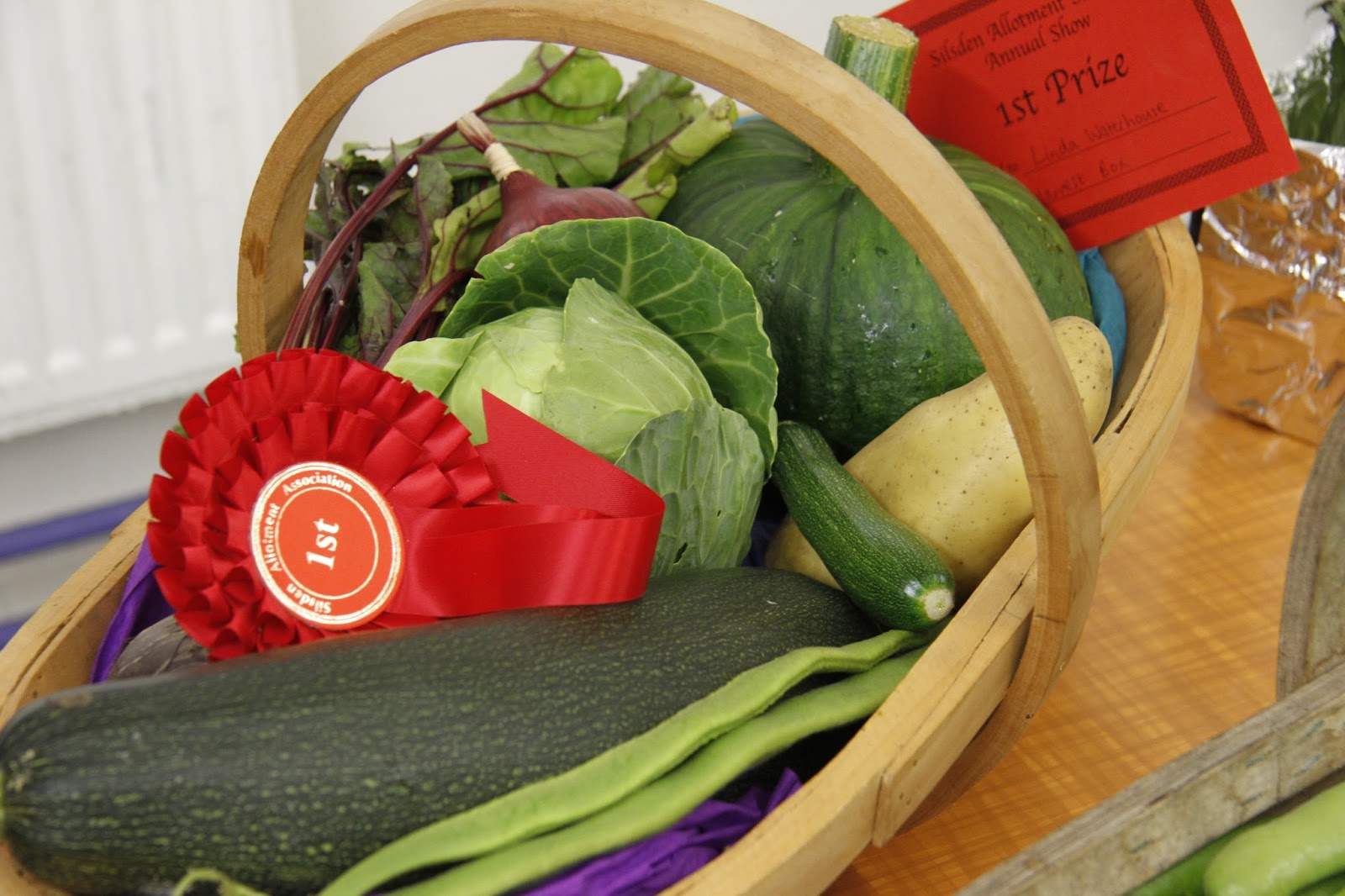
Above: the Best in Show award went to new member Linda Waterhouse for this harvest basket of vegetables.
Above: Finlay Smith also received a special award for this outstanding miniature garden in the children's classes. The show judges were Sue Bird (horticultural classes) and Lisa Preston (domestic section).


Tuesday, 9 August 2016

Lack of sunshine means butterflies feel the heat

Above: a comma butterfly, seldom seen locally despite its spread northwards in recent years. This one was photographed on thistles near the canal on August 9th. Anecdotal evidence suggests that locally this is another poor year for butterflies: too much rain and not enough sunshine. 
Above: a red admiral suns itself on buddleia, near the canal on August 9th. Nationally most butterfly species have been hit hard in the last few decades by climate change and modern farming practices. 
Above: a meadow brown feeds on honeysuckle in a glade in a local wood in July.